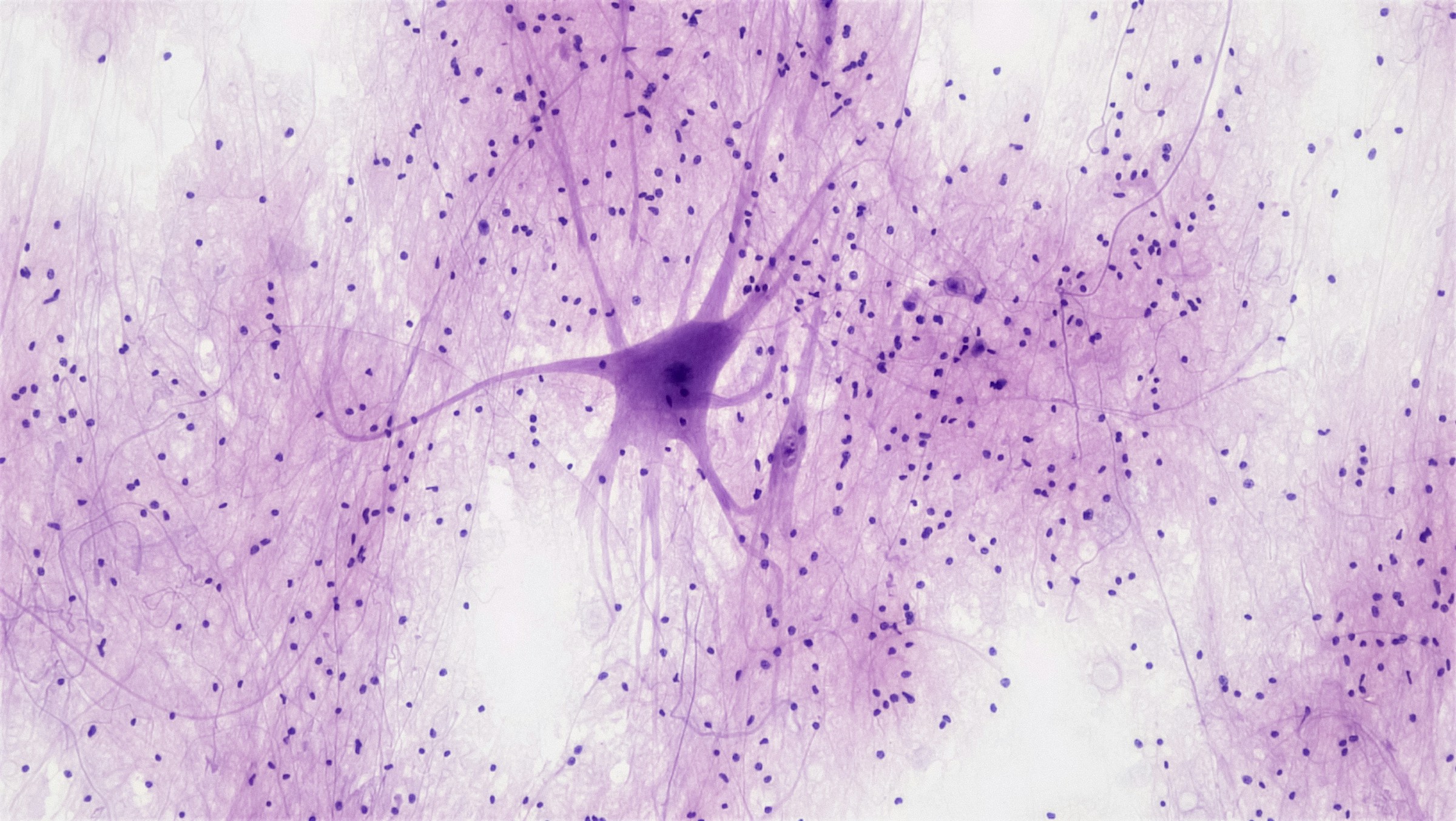
The Scientific AI Flagship establishes Human Technopole as a leader in developing and applying AI across the life sciences, health data science, and clinical research. A twofold mission, two complementary aims, and a feedback loop between methodology and application that runs through the whole institute.
The twofold mission
Two commitments that together define what the Flagship is for.
MISSION 01
Create novel, trustworthy AI methodologies.
AI methods that address the complexity of biological systems — with uncertainty quantification, calibration, posterior modelling, and explainability built in from the start, not bolted on afterwards.
MISSION 02
Make AI accessible to everyone at HT.
Lower the barrier to entry for non-specialists. Ensure AI solutions are reusable. Cultivate a shared language linking molecular, cellular, and population-level discovery across every Centre.
Two complementary aims
Methodology development and institute-wide facilitation, designed to feed into each other.
AIM 01
Scientific AI at Scale.
The methodological backbone. Develop scalable, interpretable, trustworthy AI frameworks that integrate data from molecules to populations — spanning structural biology, imaging, multi-omics, and health records. Three work packages tackle cross-scale modelling, multimodal fusion, and synthetic-data generation.
AIM 02
Science Facilitation Hub.
Two senior AI experts staffing institute-wide consultancy and rapid-prototyping support. Promising prototypes graduate into formal collaborative projects. The Hub is a scientific programme, not a service activity — it produces publishable advances while lowering the barrier to AI adoption across HT.
Research in practice
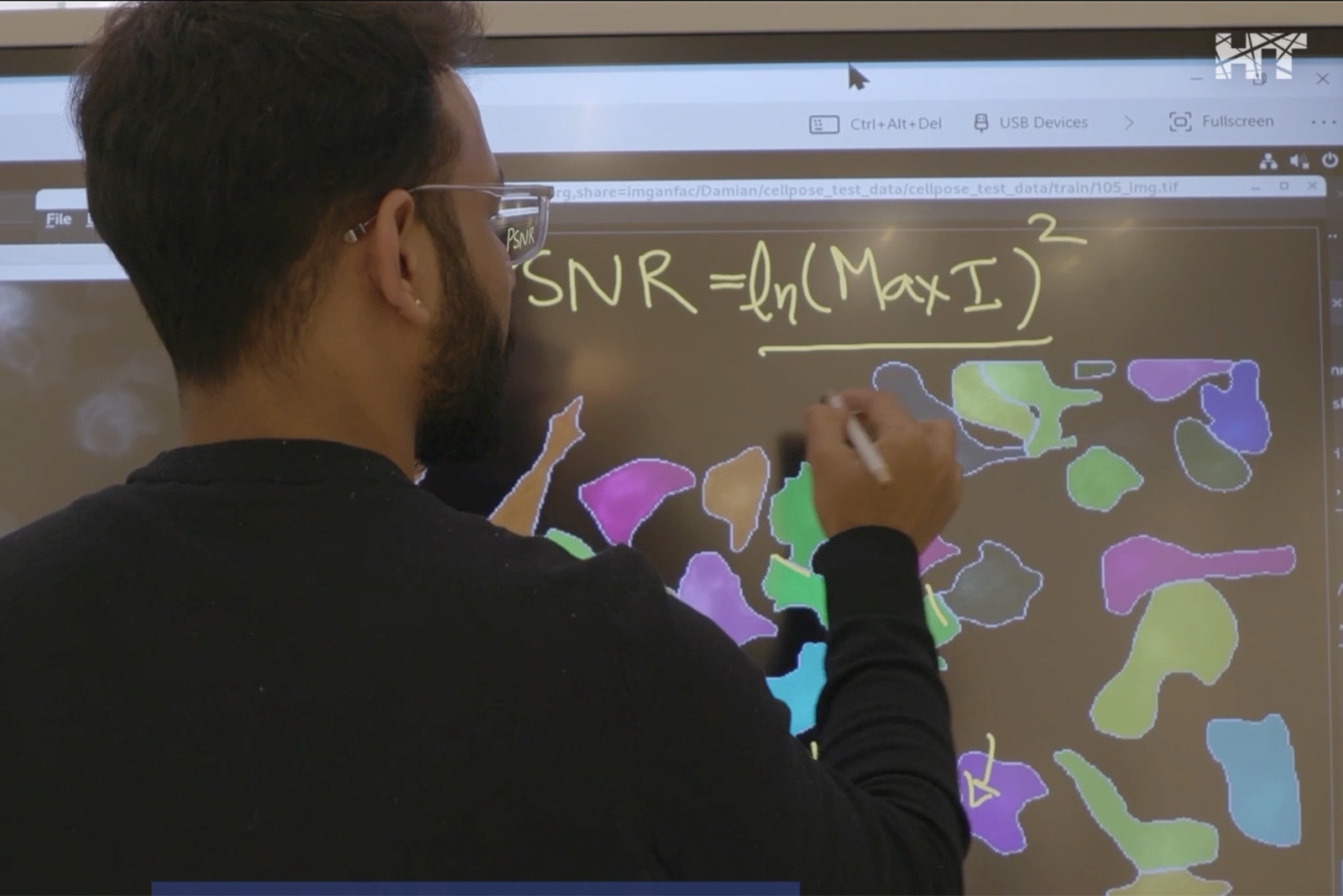
An AI method is only as useful as the calibration that backs it. Day-to-day at the Flagship: a researcher checks an AI cell segmentation against the signal-to-noise ratio of the imaging modality — asking what the model got right, where it falls short, and what the next iteration needs to learn.
The feedback loop
“Deep methodological research informs real experiments; real data drive new AI innovations. Innovation and implementation evolve together within a unified, institute-wide ecosystem.”